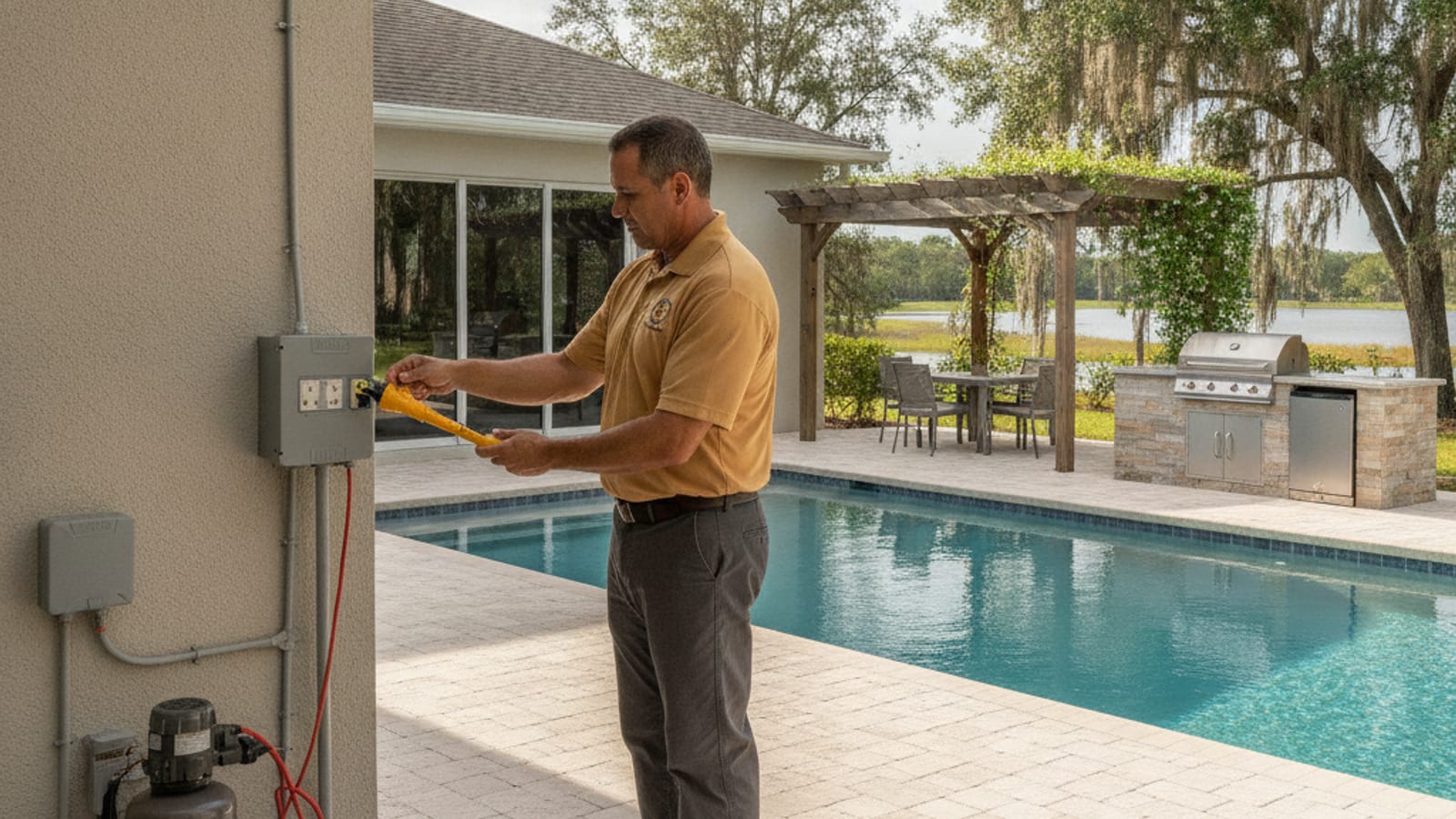
The Davenport, Four Corners, and Haines City area has one of the densest concentrations of short-term vacation rental homes in the state, most of it built to serve the Orlando theme park market. Owning one of these properties comes with electrical compliance considerations that a standard owner-occupied home in Lakeland or Winter Haven typically doesn’t face at the same level of scrutiny.
Why STR properties get more electrical attention than owner-occupied homes
A short-term rental turns over guests weekly or more often, and unlike an owner who knows their home’s quirks, a renting guest has no idea which outlet is finicky or which breaker trips if the hair dryer and the AC run at once. Property management companies, HOAs, and increasingly some county-level licensing requirements have responded by holding STR electrical systems to a higher documented standard than a typical owner-occupied home faces.
This isn’t about STR wiring needing to be fundamentally different from a regular home’s wiring. It’s about code compliance items that a homeowner might let slide for years going unnoticed getting flagged faster in a property that’s inspected regularly by a management company or that generates guest complaints when something isn’t working.
GFCI and AFCI protection gets checked more rigorously
Ground-fault protection around pools, outdoor kitchens, bathrooms, and kitchens is code-required in new construction and renovation work regardless of whether a home is a rental, but STR properties tend to get audited for this more consistently because pool areas and outdoor entertaining spaces see heavier and less careful guest use than an owner would put them through. A GFCI outlet installation check across every wet-location outlet in the home is one of the more common items that comes up during pre-listing electrical inspections for vacation rentals in this market.
Arc-fault protection is a separate but related code requirement covering bedroom and living area circuits, and it’s another item that inspection checklists for STR properties increasingly include, since it’s a fire-prevention measure that matters more when the people using the home aren’t the ones who’d notice early warning signs the way a long-term owner might.
Pool and outdoor electrical work carries its own requirements
Given how many Davenport and Four Corners STRs are built around a private pool as the main selling point, pool-area electrical work deserves its own attention. Bonding and grounding requirements around pools are specific and code-mandated, covering everything from pool equipment to nearby metal fixtures, and this is an area where a shortcut taken during original construction can become a real liability issue once the home is generating regular guest traffic.
If you’re buying an existing STR property rather than building new, it’s worth having pool-area electrical specifically inspected as part of due diligence, separate from a general home inspection, since pool bonding issues aren’t always obvious to a generalist inspector.
Outdoor kitchens and entertaining spaces
Outdoor kitchens, string lighting, and landscape lighting are common amenities on Polk County vacation rentals, and all of it needs to be on properly protected, weather-rated circuits. Landscape and outdoor lighting done for a rental property should account for guest use patterns, more switches used more often by people unfamiliar with the property, which argues for straightforward, clearly labeled controls rather than a complicated smart system a guest might not understand.
Panel capacity for a fully loaded rental property
STR properties tend to run more electrical load simultaneously than a typical owner-occupied home, multiple AC zones running to keep every bedroom comfortable for different guest groups, a pool pump and heater, an outdoor kitchen, string lighting, and often several guests all charging devices and running appliances at once during peak occupancy. A panel that was adequate for the home’s original owner-occupied design intent doesn’t always have headroom for how a busy rental actually gets used, especially during high-occupancy weeks when every bedroom and bathroom sees regular use simultaneously.
If your property is showing nuisance breaker trips during high-occupancy periods, particularly ones that didn’t happen when the home was owner-occupied or lightly used, that’s worth having evaluated as a capacity issue rather than assuming it’s guest misuse. A panel upgrade sized for actual peak rental occupancy, not just the home’s original design load, solves a problem that otherwise generates recurring guest complaints and negative reviews tied to something as simple as a tripped breaker during a hot afternoon.
Smart lock and smart thermostat integration adds its own circuits
Most Polk County STRs now run smart locks, smart thermostats, and often video doorbells as standard property management infrastructure, and all of that equipment needs reliable, properly wired power, not an improvised plug-in transformer taped near a door frame. Guest access systems in particular are a point of real operational risk if the wiring feeding them is unreliable, since a guest locked out because of a power or wiring issue becomes an emergency call regardless of the time of day. Having a dedicated, properly protected circuit for access control and property management technology is a small piece of the overall electrical scope worth discussing during any STR compliance review.
Documentation matters for insurance and platform requirements
Beyond code compliance itself, having documented proof of a recent electrical inspection increasingly matters for STR-specific insurance policies, which often carry different underwriting requirements than a standard homeowners policy given the higher guest turnover and liability exposure. Some property management companies and booking platforms have also started asking for safety documentation as part of their listing requirements. Keeping a dated inspection report on file, updated periodically rather than done once at purchase and never revisited, puts you in a stronger position if any of these parties ask for proof down the line.
What a pre-listing electrical inspection typically covers
A thorough electrical compliance check before listing a Polk County vacation rental, or before renewing any required local permit, typically covers GFCI protection at every wet-location outlet, AFCI protection on required circuits, pool bonding and equipment grounding, panel capacity relative to the home’s actual amenities, and any exterior lighting or outlet circuits added after original construction. Documentation from this kind of inspection is also useful if a property management company or insurer asks for proof of electrical compliance, which is increasingly common in this market.
Verify any contractor’s license before hiring
Given how much electrical work touches an STR property, from GFCI compliance to pool bonding to outdoor circuits, it’s worth verifying any electrician’s EC license directly at myfloridalicense.com before work begins, rather than taking a company’s word for it. This is good practice for any electrical work, but it matters more on a rental property where compliance documentation may get requested later by a management company, insurer, or local permitting office.
Do short-term rentals in Polk County have different electrical code requirements than regular homes?
The underlying electrical code is the same, but STR properties tend to face more consistent inspection and documentation requirements from property managers, HOAs, and sometimes local licensing processes, which surfaces compliance gaps faster than they’d show up in an owner-occupied home.
What electrical items get flagged most often on vacation rental inspections?
GFCI protection gaps around pools, kitchens, and bathrooms, pool bonding and grounding issues, and outdoor lighting or outlet circuits added without a permit are the most common findings on Polk County STR pre-listing inspections.
Do I need a permit for outdoor kitchen or pool-area electrical work at my rental property?
Yes, electrical work involving new circuits, pool equipment, or outdoor kitchens generally requires a permit regardless of whether the property is owner-occupied or a rental. Skipping the permit can create problems later with insurance or a compliance audit.
How do I verify an electrician is properly licensed before hiring them for rental property work?
Check the electrician’s EC license status directly at myfloridalicense.com. Don’t rely solely on a company’s website claims, verify the license number yourself before work begins, especially on a property where compliance documentation may be requested later.
How often should an STR property’s electrical system be re-inspected?
There’s no fixed statewide requirement, but given the heavier and less careful use guests put on a property compared to an owner, an annual check alongside other routine maintenance is a reasonable standard for most active vacation rentals, with a dedicated inspection any time you’re listing a newly acquired property.
If you own a short-term rental anywhere in the Davenport, Four Corners, or Haines City area and need an electrical compliance check before listing or renewing a permit, call (863) 000-0000 and we’ll connect you with an experienced, insured local electrician familiar with vacation rental requirements.