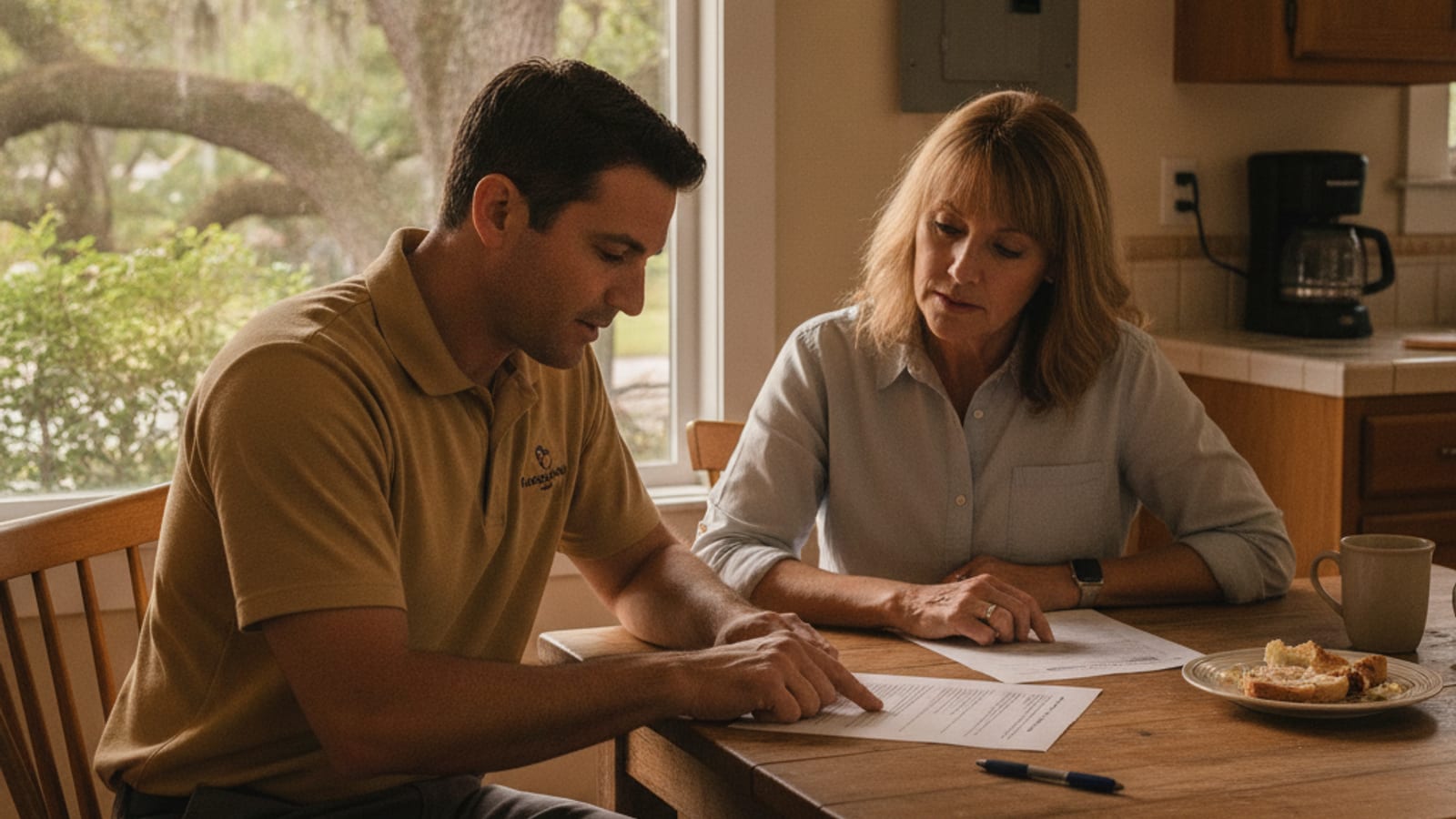
Choosing an electrician in Lakeland comes down to more than picking whoever answers the phone fastest. Between license verification, understanding what Lakeland Electric’s rebate programs actually cover, and asking the right questions before work starts, a little homework up front saves real money and headaches down the line.
Verify the license yourself, don’t take it on faith
Every electrician working in Florida needs a valid EC license, and verifying that license takes about two minutes on myfloridalicense.com. Search the business or individual’s name directly, confirm the license is active and in good standing, and check whether there are any disciplinary actions on file. Don’t rely on a website badge or a claim made over the phone, verify it yourself before signing anything or letting anyone start work.
This matters more than it might seem. Unlicensed electrical work can void insurance coverage, create real problems during a future home sale, and in the worst cases creates genuine safety hazards from work that wasn’t done to code. A legitimate electrician won’t hesitate to give you their license number so you can check it yourself.
Ask about Lakeland Electric rebate programs, but confirm current amounts directly
Lakeland Electric, like many municipal utilities, has periodically offered rebate programs for certain electrical upgrades, though program availability and rebate amounts change over time and programs can run out of funding or be discontinued. If you’re considering a panel upgrade, surge protection, or another improvement that might qualify, ask your electrician whether a current Lakeland Electric program applies, but confirm the actual rebate amount directly with the utility at the time of your project rather than relying on a figure you saw somewhere online, since programs and amounts change without much notice.
The same caution applies to federal tax credits for home electrical improvements. Several federal incentive programs changed substantially or expired for installs completed after the end of 2025, so a number that applied a year or two ago may no longer be accurate. Confirm current eligibility with a tax professional or directly with the relevant program before counting on a specific credit amount in your budget.
Get a written, itemized quote, not a verbal estimate
A phone estimate based on a description of the problem is a starting point, not a number to plan a budget around. A legitimate electrician should be willing to see the job in person, or at minimum ask detailed enough questions to give you a real written quote that breaks down labor, materials, and permit fees separately. Vague, all-in numbers with no breakdown make it hard to compare quotes from different electricians fairly.
Questions worth asking before you hire
Ask directly whether the company carries liability insurance and workers’ compensation coverage, since Florida law requires this and it protects you if something goes wrong during the job. Ask whether they pull their own permits or expect you to handle that, since permit-pulling is standard practice for legitimate electrical contractors and a company that avoids permits is a red flag worth taking seriously. Ask how long the specific type of work you need typically takes and what the warranty covers on both labor and materials.
For anything beyond a small repair, ask whether the electrician has specific experience with your situation, historic Lakeland-area wiring, a panel brand known for insurance issues, or aluminum wiring remediation, rather than assuming general electrical experience covers every specialty.
Red flags worth taking seriously
A quote that seems significantly lower than every other bid you’ve received is worth scrutinizing rather than celebrating, since it sometimes reflects unlicensed labor, corners cut on permits, or lower-grade materials that weren’t disclosed up front. Pressure to sign same-day, reluctance to provide a license number, or an unwillingness to put the scope of work in writing are all reasonable reasons to walk away and get another quote.
Reading reviews without being misled by them
Online reviews are a useful data point, but they’re easy to game and easy to misread. A handful of five-star reviews with vague, generic language, “great service, highly recommend”, tell you less than a smaller number of detailed reviews describing a specific job, what was wrong, what was done, and how the company communicated along the way. Look for patterns across multiple reviews rather than fixating on any single glowing or negative one, and weigh recent reviews more heavily than reviews from several years ago, since staffing and quality can shift over time at any company.
How response time expectations should differ by job type
Not every electrical job needs the same urgency, and a good electrician will tell you that honestly rather than treating every call as an emergency to upsell. A dead outlet or a fixture that needs replacing can typically wait for a scheduled appointment within a few days. Sparking outlets, a burning smell, a breaker that won’t stay reset, or total power loss are genuinely urgent and should get a same-day or emergency response. If a company quotes the same response time and pricing structure for both categories of problem, or pushes emergency-rate pricing on a job that clearly isn’t urgent, that’s worth questioning directly.
What a fair warranty actually looks like
Warranty terms vary by company, but a reasonable standard for residential electrical work includes a labor warranty covering at least a year on installed work, separate from whatever manufacturer warranty applies to equipment like panels, breakers, or fixtures. Ask specifically what’s covered if something fails shortly after installation, whether a return visit carries an additional service fee, and how the company handles a callback if the original diagnosis turns out to be wrong. A company that’s vague about warranty terms until after you’ve paid is a company you want clarity from before you sign anything, not after.
Local experience matters more than a big-brand name
Lakeland and the surrounding Polk County market has electrical quirks, historic-district wiring, mobile and manufactured home service, agricultural properties, three separate utility territories, that a large regional or national franchise electrician doesn’t always have deep familiarity with, even if their marketing looks polished. A smaller, genuinely local company that works in this specific market every day often has more relevant hands-on experience with your actual situation than a bigger name with a wider but shallower footprint. Neither company size nor advertising budget is a reliable signal of quality on its own, direct questions about specific experience with your type of job are.
Getting multiple quotes is worth the time
For anything beyond a minor repair, getting two or three quotes gives you a real basis for comparison, both on price and on how thoroughly each electrician explained the work. A company that takes the time to explain what they’re doing and why, rather than just quoting a number, is generally a better sign than one that rushes through the conversation.
How do I verify an electrician’s license in Florida?
Go to myfloridalicense.com and search by the business or individual’s name to confirm the EC license is active and in good standing, and check for any disciplinary history. This takes about two minutes and is worth doing before any work starts, regardless of how the electrician was referred to you.
Are Lakeland Electric’s rebate amounts guaranteed or fixed?
No. Rebate programs and their funding change over time, and amounts that applied previously may not be currently available. Confirm current program details and amounts directly with Lakeland Electric at the time of your project rather than relying on older information.
Is the cheapest quote always a bad sign?
Not automatically, but a quote significantly below every other bid deserves scrutiny. It can sometimes reflect unlicensed labor, skipped permits, or lower-grade materials that weren’t disclosed, so ask specific questions about what’s included before assuming a low number is simply a good deal.
Should an electrician pull their own permits for panel or wiring work?
Yes, in almost all cases involving new circuits, panel work, or service changes. A company that avoids pulling permits or suggests skipping the process is a real red flag, since unpermitted work can cause problems with insurance and future home sales.
Does a bigger company always mean better quality work in Lakeland?
Not necessarily. Company size says more about marketing reach than about the quality of a specific crew’s work. Direct questions about the technician’s specific experience with your type of job, and verifying the license yourself, tell you more than the size of the company advertising the service.
If you’re comparing quotes or need a straightforward answer about what a specific job should cost in the Lakeland area, call (863) 000-0000 and we’ll connect you with an experienced, insured local electrician who will give you a real, written number.