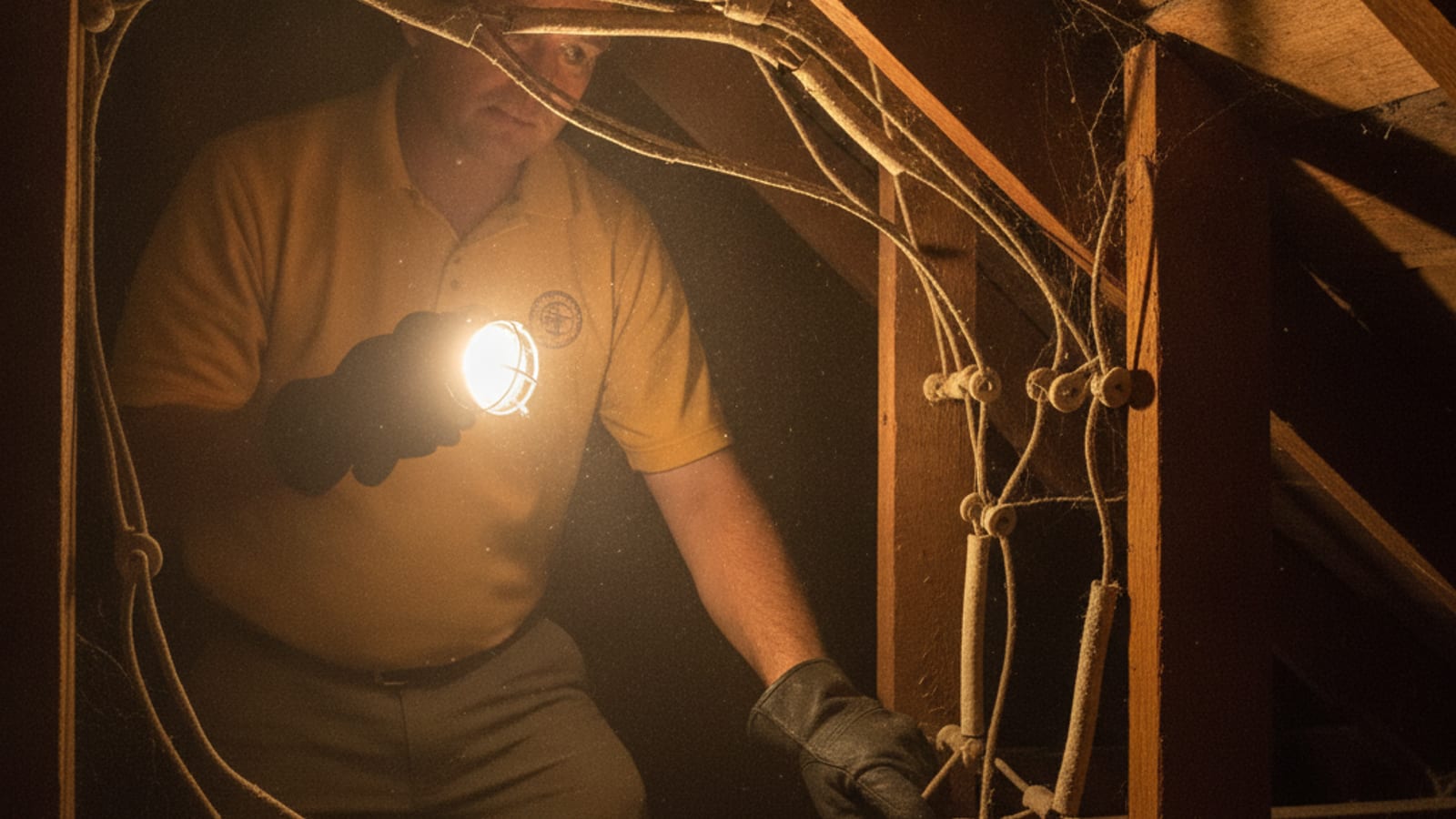
Lakeland’s historic neighborhoods, Dixieland, Lake Morton, and Crystal Lake among them, are full of bungalows and cottages built between the 1920s and the 1960s. Buy one of these homes and you’re not buying a single wiring era, you’re often buying three or four layered on top of each other, added piecemeal over decades by whoever owned the house at the time. Knowing what’s actually behind the walls matters for safety, insurance, and resale.
The 1920s and 30s layer: knob and tube
The oldest homes in Dixieland and around Lake Morton were originally wired with knob and tube, a system of individual insulated wires run through ceramic knobs and tubes rather than in a shared cable jacket. Knob and tube isn’t automatically dangerous on its own, but it wasn’t designed for the electrical load a modern household puts on a circuit, and decades of attic insulation, DIY splices, and simple age tend to compromise the original insulation over time.
Most historic Lakeland homes have had at least some knob and tube removed over the decades, but it’s common to find remnants, an abandoned run still live at the panel, or a section feeding a single fixture that nobody’s touched since a 1970s renovation. A full inspection before assuming knob and tube is entirely gone is worth doing on any home from this era that hasn’t had documented rewiring.
The 1950s and 60s layer: original 60-amp service and early aluminum
Homes built or substantially renovated in the 1950s and into the 60s typically got their first real electrical modernization, often a 60-amp fuse panel that felt generous at the time but is well short of what a modern household needs. Central air, multiple televisions, computers, and phone chargers weren’t part of the original load calculation, and a lot of these panels are still in service today, decades past what most electricians would consider a reasonable working life.
Some homes from the tail end of this period, especially additions or partial rewires done in the mid to late 1960s, used aluminum branch wiring, which behaves differently than copper at wire connections and is a recognized fire risk when it wasn’t properly terminated with connectors rated for aluminum. Aluminum wiring remediation is a common find during any serious inspection of a Lakeland-area home from this window, and it’s worth checking specifically rather than assuming a home this age is copper throughout.
The layered renovation problem
What makes historic Lakeland wiring genuinely tricky isn’t any single era, it’s the layering. A 1925 bungalow might have knob and tube in the original section, a 1958 aluminum-wired addition, and a 1990s partial rewire that added a few grounded outlets without touching the rest of the system. An electrician working on one of these homes has to trace what’s actually there room by room rather than assuming the whole house matches a single era, because it usually doesn’t.
This is also why insurance underwriting on historic Lakeland homes can get complicated. An insurer asking about panel age or wiring type is sometimes working from incomplete information, since a home can have a newer panel feeding genuinely old branch wiring, or vice versa. A documented inspection that spells out what’s actually in the walls, not just the panel’s age, gives homeowners a much stronger position when an insurer asks questions.
What a full inspection actually finds
A thorough inspection of a Lakeland historic-district home typically checks the panel type and age, tests for the presence of aluminum branch wiring at outlets and switches, looks for remaining knob and tube runs in the attic and crawlspace, and checks grounding throughout, since a lot of homes from this era have partial grounding added inconsistently over the decades rather than a complete, code-current grounding system.
The goal of this kind of inspection isn’t to scare homeowners into a full rewire they don’t need. Plenty of historic Lakeland homes have had responsible, documented electrical work done over the years and are in genuinely good shape. The point is knowing which category your specific house falls into before you’re forced to find out during a home sale or an insurance non-renewal letter.
Panel upgrades in historic homes come with extra considerations
A panel upgrade in a historic district home isn’t always a straightforward swap. Original service entrance locations sometimes don’t meet current clearance code, meter locations may need to move, and depending on whether the property falls inside a designated historic district, exterior electrical work can have additional permitting or appearance requirements. None of this makes the upgrade impossible, it just means the timeline and scope can look different than a panel upgrade on a newer home in South Lakeland or Highland City.
What renovation projects tend to uncover
A kitchen remodel, a bathroom addition, or simply opening a wall to run new cable television or internet wiring in one of these historic bungalows frequently uncovers wiring nobody knew was there. Contractors doing unrelated renovation work sometimes find an abandoned knob and tube run still carrying live voltage, or a junction box buried behind drywall from a decades-old repair that was never brought up to code. This is common enough in Dixieland and Lake Morton renovation projects that a lot of contractors now recommend an electrical scope check before demolition starts, rather than discovering surprises mid-project when a wall is already open.
If you’re planning any renovation in a historic Lakeland home, even one that doesn’t sound electrical on its face, it’s worth having an electrician walk the project with you first. Finding old wiring after a wall is already opened costs less to fix than finding it after the drywall goes back up and a future owner or inspector discovers it years later.
Ceiling fans and fixture boxes in older construction
A specific and common issue in these bungalows involves ceiling fixture boxes that were never rated to support a ceiling fan’s weight and motion, since the original construction assumed a simple light fixture rather than a spinning appliance. Adding a ceiling fan to an original 1930s or 1940s box without upgrading to a fan-rated box is a real safety issue that shows up often during ceiling fan installation calls in Lakeland’s older neighborhoods, where a homeowner assumes the existing box is fine because a fan has technically been hanging there for years without falling.
Documenting what’s been done for future owners
One of the more valuable things a historic Lakeland homeowner can do isn’t electrical work itself, it’s documentation. Keeping records of any electrical inspection, remediation, or rewiring work done on the property, including photos where possible, gives a future buyer, insurer, or contractor a real starting point instead of having to guess what’s behind the walls all over again. A lot of the layering problem in these homes exists precisely because that documentation got lost somewhere along the way, and each new owner starts from scratch rather than building on what the last owner already learned about the house.
Is knob and tube wiring always dangerous and in need of immediate replacement?
Not automatically, but it wasn’t designed for modern electrical loads and its insulation degrades with age. Any remaining knob and tube should be inspected and evaluated for replacement, particularly sections buried in insulation or feeding circuits with modern loads attached.
How do I know if my Lakeland home has aluminum wiring?
A visual inspection at outlets, switches, and the panel can usually identify aluminum branch wiring, which has a distinct dull gray color compared to copper’s reddish tone. If your home was built or renovated between roughly 1965 and 1973, it’s worth checking specifically.
Will rewiring my historic Lakeland home affect its historic designation?
Interior electrical work generally doesn’t affect historic designation status, since that typically concerns exterior appearance and structural elements. Exterior changes, like meter relocation, can have additional review depending on the specific district’s requirements, which is worth confirming with the city before starting exterior work.
Does my insurance company need to know about old wiring in my historic home?
Most insurers ask about wiring type and panel age during underwriting or renewal, and a documented professional inspection gives you accurate information to provide rather than guessing. Undocumented old wiring can affect coverage or premiums more than wiring that’s been properly inspected and, where needed, addressed.
If you own a historic Lakeland home and want a clear picture of what’s actually behind the walls before your next insurance renewal or a planned renovation, call (863) 000-0000 and we’ll connect you with an experienced, insured local electrician who works on homes from this era regularly.